Many of us in Oswego, Aurora, Plainfield and Naperville (IL) may recognize some or all of the following high-profile individuals:
| Michael Phelps | Justin Timberlake | James Carville |
| Simone Biles | Trevor Noah | Adam Levine |
| Ryan Gosling | Ellen DeGeneres | Jim Carrey |
What do they have in common? They've publicly discussed or been associated with attention deficit hyperactivity disorder (ADHD).
According to national survey estimates, approximately 15.5 million U.S. adults (2023 data) and 7 million children ages 3–17 (2024 data) currently have an ADHD diagnosis. Combined, these figures represent approximately 22.5 million Americans.
ADHD is one of the most common neurodevelopmental disorders in the U.S. Those in Oswego, Aurora, Plainfield or Naperville who have it or know someone who does are likely familiar with related symptoms such as inattention, hyperactivity and impulsivity.
Today, our understanding of ADHD has evolved beyond the idea of a simple chemical imbalance in the brain. Researchers are also investigating the relationship between the gut microbiome and mental health, including how the microorganisms living in our digestive systems may influence brain function, behavior and neurological development.
The gut microbiome is a community of microorganisms that constantly interact with one another and the body. Some of these interactions may factor into neurotransmitters and brain processes involved in ADHD.
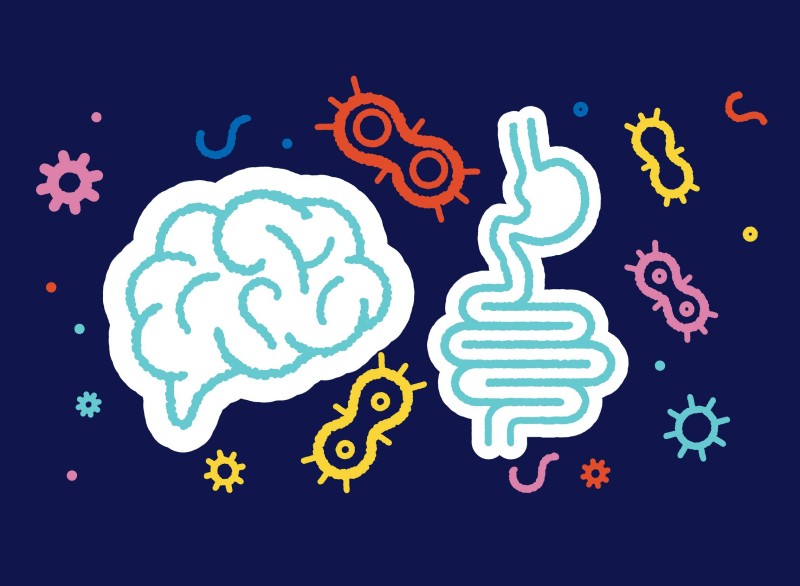
The gut and brain communicate through what’s known as the gut-brain axis, a two-way communication network involving the nervous system, immune system, hormones and microbial metabolites.
In studying this relationship, researchers explore how the microbiota supporting our digestive and immune systems and metabolism may also influence our mood and cognitive functioning, including features associated with ADHD such as attention, motivation and impulsivity.
While evidence of an association between the gut microbiome and ADHD is growing, considerably less evidence supports the idea that gut problems cause ADHD or that changing the microbiome reliably improves its symptoms.
Findings across studies can vary:
A 2026 systematic review found differences in gut bacterial composition among people with ADHD, but researchers have not identified a consistent microbial pattern that defines the condition.
A 2026 review of probiotic supplementation in children and adolescents with ADHD found no clear overall benefit for core ADHD symptoms, although some broader behavioral measures showed modest improvements.
A 2025 meta-analysis found associations between ADHD and certain gastrointestinal symptoms, including constipation and flatulence. It also found a significant association with irritable bowel syndrome (IBS). However, the findings do not establish cause and effect.
A 2025 meta-analysis examining microbiome-based interventions for ADHD and autism found a small overall improvement across the combined conditions. Its ADHD subgroup also showed a modest improvement, although the authors emphasized that the evidence remains preliminary.
The growing interest in how gut health may influence ADHD symptoms reflects how far our understanding of the condition has evolved.
During the last several decades, scientific thinking about the condition has adjusted from relatively simple explanations toward a multifactorial neurodevelopmental model.
Rather than proceeding in a linear sequence, scientific explanations evolved along different paths. Some theories were replaced, others were refined and several ideas developed in parallel as new evidence emerged.
So how did we progress from early observations of ADHD to investigating the role of the gut microbiome in mental and behavioral functioning?
1960s–70s: Researchers increasingly viewed persistent hyperactivity and attention difficulties as potentially related to neurological functioning rather than simply being misbehavior.
1980s: DSM-III introduced the diagnosis of Attention Deficit Disorder (ADD), with or without hyperactivity. This reflected a growing recognition that attention difficulties could be central to the condition, not just a byproduct of excessive activity.
1990s: More research looked into inherited susceptibility, differences in brain networks and the roles of dopamine and norepinephrine. Executive-function models emphasized challenges with inhibition, working memory, planning and self-regulation. ADHD also became more widely recognized as persisting into adulthood.
2000s: Twin and family studies reinforced evidence for substantial genetic contributions. Brain-imaging research investigated differences in how attention, reward and control networks developed and functioned. Researchers continued to refine their understanding of executive functioning and the persistence of ADHD into adulthood.
2010s: Large genetic studies, developmental research and improved imaging supported a model in which genetic variants and developmental factors contribute to risk. Researchers also looked at prenatal exposures, sleep, stress, environmental toxins and social context. They further distinguished elements associated with ADHD from those proven to cause it.
2020s: Current research examines how genetic susceptibility interacts with development and life experiences. Scientists are investigating brain-network dynamics, sleep and circadian rhythms, immune and metabolic processes, and the gut-brain axis.
From this continuum, we can interpret three main shifts in scientific thinking about ADHD:
from early neurological explanations to a neurodevelopmental model
from a chemical imbalance to complex neural signaling
from nature versus nurture to multifactorial interacting influences
Scientific research helps us understand what may contribute to ADHD. But beyond the science lies another important consideration: how the condition affects the people living with it.
ADHD is not simply a matter of struggling to concentrate or sit still. For many individuals, it can also involve persistent frustration, difficulty regulating emotions, inconsistent motivation, fatigue and amplified stress of daily responsibilities. Over time, these challenges may contribute to anxiety, depression and diminished self-confidence.
While researchers continue investigating the underlying mechanisms of ADHD and potential paths for treatment, individuals with the condition still have to navigate its challenges every day. That often means developing habits and practices that support their overall well-being.
Although the evidence is not conclusive, diet may play a part in how someone with ADHD feels and functions. The gut microbiome is a plausible part of that relationship.
At present, the evidence remains stronger for the benefits of adequate nutrition and addressing specific dietary problems than for using diet or microbiome supplements as a treatment for ADHD itself.
Considering three questions can help clarify currently available evidence as it applies to ADHD and the gut-brain axis.
Q: Can diet influence attention, impulsivity and emotional regulation?
A: Yes
Diet can impact energy levels, hunger, sleep, physical health and general cognitive functioning. These effects may matter especially when someone already struggles with attention or self-regulation.
Skipping meals, insufficient calorie intake or an unbalanced diet can compound existing ADHD challenges without being the underlying cause of ADHD.
Vegetables, fruit, legumes, whole grains, nuts and seeds provide fiber and nutrients needed for normal brain and digestive function. Fiber also feeds gut microbes that produce metabolites involved in intestinal and immune health.
While not establishing causation, many observational studies have linked higher added-sugar intake or sugar-rich dietary patterns with ADHD symptoms or less favorable behavioral outcomes.
Q: Can gut bacteria factor into brain processes involved in ADHD?
A: Yes
Researchers are investigating several possible pathways. A 2025 systematic review examining 14 human studies involving 1,319 participants found that some studies reported differences in the gut microbiomes of people with ADHD. However, the studies varied in their findings, populations and methods.
These findings have not yet established whether the observed microbial differences play a meaningful role in ADHD symptoms. Scientists are investigating whether the reported differences affect:
Although there is not yet sufficient evidence to treat ADHD by targeting the gut microbiome, good nutrition and digestive health remain worthwhile components of overall physical and mental well-being.
As we continue pursuing our understanding of ADHD, certain current questions loom large.
In particular, researchers still need to determine whether:
microbiome differences contribute to ADHD or result from differences in diet, medication, sleep, stress or other factors
particular bacterial functions matter more than the presence or absence of individual species
the microbiome has a greater influence during early brain development than later in life
a subgroup of people with ADHD can benefit from specific, reproducible microbiome interventions
improvements in digestive health translate into measurable, lasting improvements in attention, impulsivity or emotional regulation
The microbiome may eventually help explain why ADHD presents differently across individuals. In the meantime, continuing to pursue evidence-based ADHD treatment while maintaining good nutrition and digestive health can contribute to healthy symptom management.
Empowered Life Therapy believes in living as the authentic self with mental and emotional well-being. We are here to inform for mental health just as we are to help heal and support it. If you or someone you care about would like to further discuss ADHD symptoms and treatment, we welcome your inquiry. Simply contact us at (630) 383-9999 to discuss our therapy for Oswego, Aurora, Plainfield and Naperville (IL).
 Kasey Huff
